10 Facts That Will Make You Love Bison Even More than You Already Do

Posted: September 15, 2026 | Author: Breanne Sewards | Estimated Read Time: 3 minutes

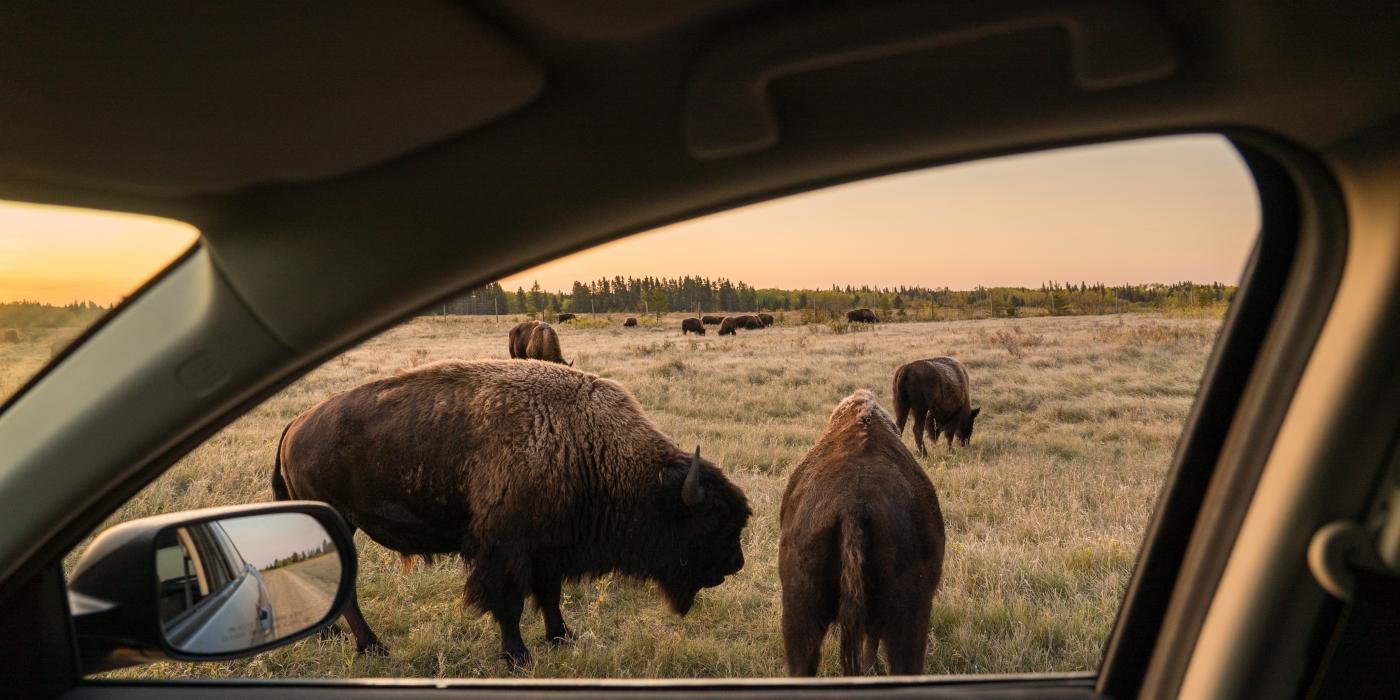
Among all the quintessential Manitoban views, seeing a bison standing tall in a golden field against the backdrop of a setting sun is up there as one of the best. Here are 10 fun facts you may or may not know about our beloved bison!
Bison Facts You Didn't Know You Needed

  • Manitoba's plains bison was formally designated the province's official mammal on June 12, 2014, though it's been a symbol here since 1870.
  • Riding Mountain National Park's Lake Audy enclosure is home to about 40 plains bison roaming a 500-hectare range.
  • Bison can run up to 55 kilometres per hour and jump nearly 2 metres—always view them from your vehicle.
  • Calves are born in May and June, so late spring is a good time to spot young bison with the herd.
  • FortWhyte Alive's summer Bison Bus Tours are a great way to learn about bison's role in Indigenous history on the Great Plains.

1. The bison is Manitoba's official mammal

Zoologically known as Bison bison bison (how great is that?), the plains bison has been a tried and true symbol of Manitoba since 1870. Look around and you'll see the bison on our coat of arms and flag, in the provincial government's logo, flanking the Grand Staircase inside the Manitoba Legislative Building, and even as the mascot of the University of Manitoba.

2. There are two living subspecies of wild bison in North America

Next time you see a bison in Manitoba, try to identify which subspecies it is that you are looking at. After all, Manitoba is home to both wood bison (Bison bison athabascae) and plains bison (Bison bison bison). Plains bison have massive heads and shaggy capes, while woods bison have triangular heads and more distinctive shoulder humps.

3. Riding Mountain National Park is home to a herd of 40 plains bison

Riding Mountain National Park is a bison hotspot here in Manitoba, thanks to its captive herd of 40 plains bison. The bison that roam the 500-hectare enclosure are descendants of a small group that were introduced from Elk Island National Park in the 1940s, as an effort toward conservation of the rapidly disappearing species. Consider taking a drive through the Lake Audy bison enclosure and don't be surprised if there's a few big, furry roadblocks in the way!

4. A living symbol of the Great Plains

At one point in human history, bison roamed North America in the millions. For the Indigenous peoples who inhabited the Great Plains, the bison was an essential source for food, shelter, clothing, fuel, ornamentation and more. This unique relationship can be explored further with the Bison Bus Tours at FortWhyte Alive, which runs during the summer.

5. The bison is the largest mammal in North America

That's right—even the wildlife are bigger and better in Manitoba. The wood bison is one of the largest species of bovid (cloven-hoofed, ruminant mammals) in the world and is also one of the heaviest and longest. In North America, only the moose can beat the bison in height.

6. Bison are super speedy

You might want to be sitting down for this fact. Not only can bison run up to 55 kilometres per hour, they can also jump up to 2 metres into the air. We've never witnessed it, but we believe it. All the more reason to never exit your car when encountering a bison!

7. Bison communicate using their tails

In addition to making sounds and engaging in some pretty serious stare-downs, bison communicate by flicking their tails. You can predict a bison's mood fairly well by looking at their tail: a relaxed bison means a relaxed tail. A playful bison's tail flicks back and forth, while an angry or frightened bison will hold its tail straight in the air.

8. Rutting season can be intense

Rutting season runs from July to mid-September, during which the herds move more often as bulls challenge each other in their mating rituals. Confrontations between male bison can involve everything from headbutting and shoving to locking horns. Tawny yellow calves are born in May and June and are generally cared for by both parents.

9. Bison can live for 20 years

With a lifespan of between 15 to 20 years, a bison's life expectancy will depend on whether or not it lives in the wild—where it must contend with predators like wolves and grizzly bears.

10. Bison are herbivores

Regardless of their astonishing speed and size, bison are gentle giants that live off grasses and sedges. In the winter, they use their foreheads to push the snow away in order to access the grasses beneath.

Plan Your Bison-Spotting Trip

  • Best time to go: Late spring (May–June) for calves; year-round for the Lake Audy herd at Riding Mountain National Park.
  • No time for a road trip? Assiniboine Park Zoo's Grasslands & Boreal Forest exhibit has bison on-site year-round, right in Winnipeg.
  • Book ahead: FortWhyte Alive's Bison Bus Tours run in summer and should be booked in advance.
  • Stay alert during rut: Bulls are more active and unpredictable from July to mid-September—extra reason to stay in your vehicle.
  • Safety first: Always view bison from inside your vehicle. They're fast, powerful and unpredictable at close range.

Manitoba's bison are more than a provincial symbol—they're a living connection to the land's history and an unforgettable sight for any visitor. See them for yourself at Riding Mountain National Park or FortWhyte Alive, and plan your Manitoba wildlife adventure today.

You May Also Enjoy

For the Love of Earth Day! 23 Awesome Facts about Nature & Wildlife in Manitoba

From subarctic wildlife to ancient landscapes shaped by ice, Manitoba is full of natural wonders that surprise and inspire. These 23 facts highlight just how diverse and fascinating this province can be. Know a fun fact about Manitoba? Email us at...
14 Fascinating Facts About Beluga Whales

Beluga whales are some of the most curious, social creatures in the subarctic—and Manitoba is one of the best places on Earth to see them.
43 Fun Facts About Manitoba You’ll Wish You’d Learned Sooner

Unique subarctic wildlife, stunning northern lights displays and a rich heritage—upon a closer look, Manitoba is full of surprises.

About The Author

Hey! I'm Breanne, Editorial Content Specialist for Travel Manitoba. First to jump in the lake and last to make it down the River Trail. Lover of croissants, cats, and croissant-shaped cats. Got a story idea? Email me at bsewards@travelmanitoba.com.

Editorial Content Specialist